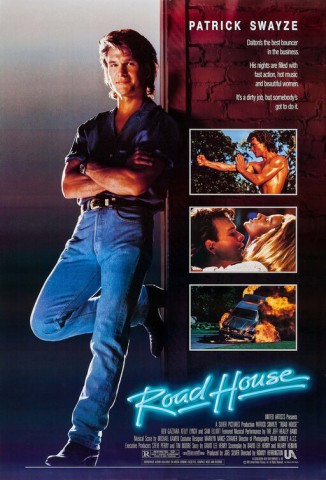
Road House (1989)
No Longer Playing
1989 114 min
Join us before the screening from 8-9pm in the Lounge for beer sampling while supplies last
Once every century or so arises a work that offers a broad cross-section of humanity an all-encompassing text from which an entire worldview can be derived—one that allows a dizzying multiplicity of consumers to project themselves into its framework, and its teachings onto their lives. Works such as Tao Te Ching, Bhagavad-Gita, the Bible, and Dianetics have all spawned sturdy religious movements, and, 37 years after its release, the cult of ROAD HOUSE seems similarly destined to endure over the coming millennia.
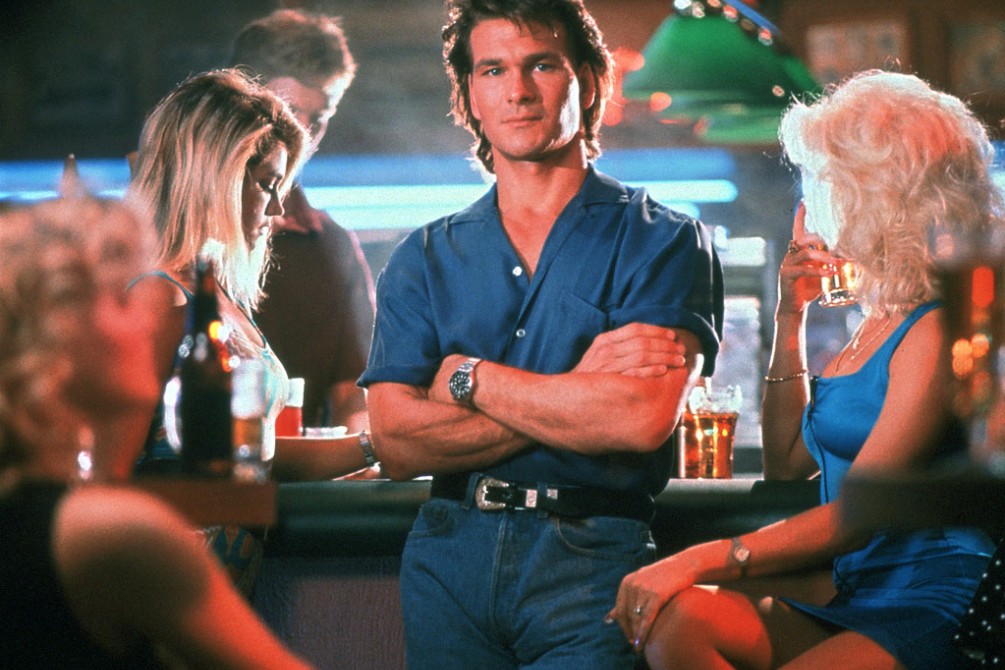
On one level it's a formulaic "hero's journey," recognizable as a mid-budget martial arts affair. Swayze's mononymous Dalton, accepting a gig to clean up a road house in Jasper, Missouri, instead encounters the fight of his life, defending the town's long-suffering innocents against a reign of terror imposed by oligarchic madman Brad Wesley (Ben Gazzarra). There are, of course, interludes: incendiary romance with a "sexy but smart" (she wears glasses!) ER doctor played by Kelly Lynch, and contentious bromantic dalliances with Dalton's lapsed mentor/sensei (Sam Elliott, never better).
Throughout the movie, there's a kind of secret sauce uplifting the raw material, a sense of wonder that patiently and reliably turns casual viewers into zealots. Cult movies are often described as "quotable" or "so bad it's good," and ROAD HOUSE both exemplifies and transcends these clichés. The ROAD HOUSE convert is left pleasantly empty-headed, uttering phrases like "you just have to see it" . . . and although that's not a very fresh thought, it's possibly the only eternal truth about this film. – Gabriel Wallace
Before the first punch is thrown, join us for a free 21+ pre-show beer tasting inspired by the rowdy spirit of the Double Deuce - drawing from the rituals, characters, and charm of dive bar culture. Presented in partnership with the Beer Culture Center and Bier Omakase, this curated tasting features four beer tastings rooted in the kinds of places where stories unfold over a beer and spill out onto the big screen. Tasting happens from 8pm-9pm while supplies last.
The Beer Culture Center is a non-profit organization dedicated to sharing stories of how beer and alcohol have shaped humanity. Please join them for the 8th Annual Beer Culture Summit happening May 7-9.
Bier Omakase is a Chicago-based, storytelling-driven tasting experience that treats beer and other fermented beverages as a curated journey -- each pour thoughtfully selected and paired with context, history, and stories. It's designed to bring people back into conversation, turning drinking into something more communal and intentional.
Music Box Theatre screens films of all genres and from every era of cinema, both new releases and repertory. These films may sometimes contain upsetting, outdated, or offensive material. While we aim to introduce many of our screenings, we do not always provide warnings about potentially triggering content within the films we screen. We encourage our patrons to research the film before they attend using trailers, reviews, or content information found on Common Sense Media, IMDb and DoesTheDogDie.com.
Recommended Films
Santo in the Vengeance of the Mummy + Santo vs. the Riders of Terror